Showing posts with label 4RV Publishing. Show all posts

Thursday, April 25, 2024

Growing Beyond Rejection


Rejection. It happens to all of us. We hate it. Rejection can test our resolve, create self-doubt, and could lead to depression. And considering agents and publishers are often overwhelmed with submissions, the form letters that writers often receive don't provide desired feedback to propel them forward. 

So, how can writers grow beyond the pain of rejection? Here are a few tips to help you look forward instead of backward.

Give yourself time to grieve, just not too much.

You spent months, maybe years crafting a manuscript you felt ready for submission. Then the swift rejection comes, and it hurts. Instead of that Sally Field, "you like me" Oscars moment, you feel like your work never even garnered the attention of the nominating committee. 

It's okay to grieve for a day or two. Show yourself some compassion, just like you would to a friend if the same shoes were on their feet. Then it's time for action.

Write a letter about how you feel or journal through the experience.

After one recent rejection, I opened my online journal and just let it all out. Taking the time to write or type out your true feelings allows you to express them without judgement or repercussions. 

Take time to write down or journal about your writing strengths. This allows you to focus on the positives. 

Switch gears.

Maybe you need a couple of days away from this manuscript. What can you do in the interim so you come back to the project energized? Write something new. Exercise. Take walks and observe nature. Have breakfast or lunch with a friend. 

Look forward.

If the rejection letter provides feedback, consider those comments. What can you glean from them? Is there still work to do? Put together a plan to accomplish that work. 

Make sure you continue to research new markets where you can submit your manuscript. Revise your query letter so it is ready for those new submissions. 

A rejection doesn't define you or your writing. Growing beyond the rejection by finding an outlet for your feelings and putting together an action plan will put you on a forward path.


Cheryl C. Malandrinos is a freelance writer and award-winning editor. She is the author of four children’s books including, A Christmas Kindness, released by 4RV Publishing. A blogger and book reviewer, she is a member of SCBWI and lives in Massachusetts with her husband and three adult children. Visit Cheryl's website at https://ccmalandrinos.com or her children’s book blog at https://childrensandteensbookconnection.wordpress.com

Tuesday, March 26, 2024

First Quarter Writing Goals Review

It's hard to believe the first quarter of 2024 is almost done. At the beginning of the year, you set your writing goals. Now, it's time to reflect on how you did. Some questions to ask yourself are:
  • What did I accomplish?
  • How did I handle the obstacles that came my way?
  • Are there tasks carrying over into the next quarter?
I also find it helpful to ask the following question: If I had a magic wand, what would my writing life look like? 

Why a magic wand? Because magic wands summon infinite powers. They unleash possibilities. 

Pretend that you're Cinderella toiling away day after day just wishing and hoping for that one thing. Suddenly, Fairy Godmother appears, and she will grant you the one wish you want most. Poof! You are living your dream writing life.

Sometimes, we allow our routines, obstacles, and bad habits to keep us from what we want most. However, if we can imagine it, we can create it. How? By focusing on that one thing. 

As we proceed through the year, we will talk more about this topic. You have the power to make your dreams come true!


Cheryl C. Malandrinos is a freelance writer and award-winning editor. She is the author of four children’s books including, A Christmas Kindness, released by 4RV Publishing. A blogger and book reviewer, she is a member of SCBWI and lives in Massachusetts with her husband and three adult children. Visit Cheryl's website at https://ccmalandrinos.com or her children’s book blog at https://childrensandteensbookconnection.wordpress.com

Tuesday, January 9, 2024

Reflecting on Your Writing Year


Every year about this time, I get to thinking about my writing year. 
  • How did I do?
  • What did I accomplish?
  • How did I handle the obstacles that came my way?
  • Are there tasks I am carrying over into the new year?
Such a reflection allows you to celebrate the milestones and identify areas for improvement. Whether you make a bulleted list, write a letter to yourself, or post an entry in your journal, reflective writing will move you forward as a new year begins. 

What are some of last year's writing accomplishments you are proud of? What is a goal you are setting for 2024? 


Cheryl C. Malandrinos is a freelance writer and award-winning editor. She is the author of four children’s books including, A Christmas Kindness, released by 4RV Publishing. A blogger and book reviewer, she is a member of SCBWI and lives in Massachusetts with her husband and three adult children. Visit Cheryl's website at https://ccmalandrinos.com or her children’s book blog at https://childrensandteensbookconnection.wordpress.com

Tuesday, December 26, 2023

Happy New Year!: Writing Resolutions for 2024


The new year is almost here. Maybe you're contemplating your new year's resolutions right now. Many of us set the usual ones: eat healthier, exercise more, reduce stress. It is also a good time to consider your writing resolutions. Though you can do this any time throughout the year, January often inspires and motivates us. 

Here are some resolutions for writers:

Read More

Reading is a more fun way of saying market research. Read, especially in the genre you write, so you can learn what is selling well in your genre and where your book would fit into the market. This will also allow you to check out book covers and titles and how these books are marketed. While there is more to market research than this, reading more books is a good start.

Create a Regular Writing Schedule

Creating a regular writing schedule encourages the discipline of writing. If it didn't work, why would NaNoWriMo be so popular? The reason I don't say create a daily writing schedule is because that might not be realistic for everyone. But, whether you have one day, three days, or seven days available to write each week, sticking to your schedule will encourage you to write more.

Find an Accountability Partner

Often called writing buddies, these fellow writers keep us accountable and help us reach our goals. When I joined a local writing group, we were expected to bring a chapter with us to read each meeting. No one wanted to be the person without a chapter. Regular check-ins with your accountability partner will keep you on track.

What are some writing resolutions you are setting for 2024? How are you planning to succeed in the new year?


Cheryl C. Malandrinos is a freelance writer and award-winning editor. She is the author of four children’s books including, A Christmas Kindness, released by 4RV Publishing. A blogger and book reviewer, she is a member of SCBWI and lives in Massachusetts with her husband and three adult children. Visit Cheryl's website at https://ccmalandrinos.com or her children’s book blog at https://childrensandteensbookconnection.wordpress.com

Wednesday, December 13, 2023

Creating A Startup or Business Plan for Your Writing Career


Image by rawpixel.com on Freepik


If you decided to start a small business, one of the initial steps would be to create a detailed business plan that would include the business concept, product and services, marketing, operations, organization and management, financial planning, and industry growth. 

So, why do so many writers skip this important aspect of starting and planning a writing career? 

In order for any business to succeed, there has to be a written plan. Now, that plan can change over time, but few entrepreneurs succeed by treating their businesses like a pot of spaghetti cooking on the stove: throwing a noodle at the wall to see if it sticks. 

The startup plan is a trimmer version of a business plan. Since a writing business may be simpler in nature than other types of businesses--at least in terms of what needs to be considered--this approach might be helpful. 

A startup plan will include:

  • Goals - S.M.A.R.T. goals to provide direction and motivation
  • Resources - capital, technology, personnel, and time
  • Market analysis - knowing your target market and how to reach them
  • Competition analysis - understanding your competition and how to set yourself apart
  • Financials - money needed to start, projected income, and projected expenses

Even if you are well into your writing career and want to increase your income potential, a streamlined plan could be helpful. 

Now is the perfect time to put together your 2024 business or startup plan. You can find a multitude of examples and some free templates online to help. 


Cheryl C. Malandrinos is a freelance writer and award-winning editor. She is the author of four children’s books including, A Christmas Kindness, released by 4RV Publishing. A blogger and book reviewer, she is a member of SCBWI and lives in Massachusetts with her husband and three adult children. Visit Cheryl's website at https://ccmalandrinos.com or her children’s book blog at https://childrensandteensbookconnection.wordpress.com

Wednesday, November 22, 2023

NaNoWriMo Lessons


NaNoWriMo is nearly 75% over. Shocking how quickly time goes by. How are you doing with your writing? Did you decide to participate? Did you plot it out or come up with an idea and run with it? 

Admittedly, I've never been a huge fan, but there is so much to gain if you commit to writing for thirty days. 

Planning 

Maybe some writers can have an idea in their heads and run with it. I'm not sure there are many of those out there who are successful. After all these years of being a total panster, I've discovered sometimes you need more than just the idea or a few character sketches.

This year's approach involved following a process of creating a synopsis, scene settings, a list of characters and their story arcs; outlining the plot, subplots, and inciting incidents; and then developing numerous scenes, so that when writing began, the words flowed easier.

Discipline

It can take an average of 30 to 60 days to change a bad habit, and longer than two months to create a habit. When you have only 30 days to reach 50,000 words, you need to hit 1,667 daily or be willing to make up the gap the next day. 

Daily writing has numerous benefits. It helped me write faster than ever before, even if I am still slower than I would like. Other known benefits include:

  • Becoming more aware of overused words and phrases
  • Learning what your writing style is
  • Giving you a sense of accomplishment
  • Potentially making you more money
Community

Writing can be a solitary task. Critique groups serve their purpose, but with NaNoWriMo you can have buddies to cheer you on. This is something I encourage you to find even after NaNoWriMo is over. 

Whether you participated this year or not, here's hoping you are developing a plan to increase your productivity in 2024 with daily writing. 


Cheryl C. Malandrinos is a freelance writer and award-winning editor. She is the author of four children’s books including, A Christmas Kindness, released by 4RV Publishing. A blogger and book reviewer, she is a member of SCBWI and lives in Massachusetts with her husband and three adult children. Visit Cheryl's website at https://ccmalandrinos.com or her children’s book blog at https://childrensandteensbookconnection.wordpress.com

Wednesday, November 8, 2023

Writing Inspiration and Check-in


Picture credit rawpixel at freepik.com 


How's your writing going? Are you participating in NaNoWriMo this month or any other type of writing event? Though writing can often be a solitary task, the great thing about social media is that writing communities are right at your fingertips. Not all of them are free, but they can help with the isolation writers feel from time to time. 

The other wonderful thing you can find on social media is writing news: new books, writers talking about the representation agreements they just signed, book birthdays, book giveaways, and even writers talking about queries that have gone nowhere.

Now, before you think I'm encouraging you to waste your writing time on internet browsing, I'm only sharing it because we all need to connect with fellow writers from time to time and read some news to inspire us and cheer us on. 

Here are a few of my favorite inspirational quotes about writing. Hope you'll share some of yours.

Write what should not be forgotten. ~ Isabel Allende 

To live a creative life, we must lose our fear of being wrong. ~ Joseph Chilton Pearce  

Writing, to me, is simply thinking through my fingers. ~ Isaac Asimov 

A book is a dream you hold in your hand. ~ Neil Gaiman 


What will you write today? What will you write tommorow?


Cheryl C. Malandrinos is a freelance writer and award-winning editor. She is the author of four children’s books including, A Christmas Kindness, released by 4RV Publishing. A blogger and book reviewer, she is a member of SCBWI and lives in Massachusetts with her husband and three adult children. Visit Cheryl's website at https://ccmalandrinos.com or her children’s book blog at https://childrensandteensbookconnection.wordpress.com

Wednesday, October 11, 2023

Tips to Increase NaNoWriMo Productivity


Photo from Freepik

NaNoWriMo kicks off in 21 days. Can you believe it! Are you ready? 

We've already discussed how to add a large writing project like NaNoWriMo into your jam-packed schedule. Now, it's time to plan ahead, consider how to eliminate distractions and time wasters, and make sure you get enough rest.  

Plan ahead 

Planning ahead is vital to creating a realistic writing schedule. Some ways you can plan ahead before tackling NaNoWriMo are:

  • Spend a few hours preparing menus for each week of November, including your holiday menu (if it applies).
  • If you’ll be entertaining, ask friends and family if they would be willing to bring a food dish.
  • Shop in bulk to cut back on errands to pick up food, household items, and office supplies.
  • Consider ordering holiday cards and envelopes pre-printed.
  • Time block your calendar, adding NaNoWriMo writing time into your most productive timeframe.

Eliminate distractions and time wasters 

Distractions and time wasters can threaten any project, no matter the size. It is especially important when approaching NaNoWriMo to eliminate activities that steal time from your writing. Here are some tips to help:

  • Set aside a specific time during the day to return phone messages and emails. Discipline yourself not to check email or surf the Internet when you should be writing. 
  • Share your time-blocked calendar with family members before you start NaNoWriMo, so they will know when you're writing.
  • Find a private place where you feel most productive and inspired to write.
  • Hang a "writing in progress" or "writer at work" sign on your door or put a tent card on your desk, asking family ahead of time not to interrupt you unless it's an emergency.
  • If you have young children who require care, have books, crafts, or other items to entertain them during writing time.

Rest up

One thing that will help with stress- and time-management during NaNoWriMo is getting enough rest. Burning the candles at both ends helps no one, and certainly not your writing. Get the required amount of sleep each night so that you’ll have a well-rested mind to tackle writing and anything unexpected that comes your way. Add bedtime to your calendar. 

Don't wait until the last minute to prepare for NaNoWriMo. Plan ahead, think of ways to eliminate what can pull you away from writing, and schedule bedtime into your calendar so you get enough rest leading up to and while you are participating in NaNoWriMo. 

Good luck to all who will participate in 2024!


Cheryl C. Malandrinos is a freelance writer and award-winning editor. She is the author of four children’s books including, A Christmas Kindness, released by 4RV Publishing. A blogger and book reviewer, she is a member of SCBWI and lives in Massachusetts with her husband and three adult children. Visit Cheryl's website at https://ccmalandrinos.com or her children’s book blog at https://childrensandteensbookconnection.wordpress.com

Tuesday, September 12, 2023

Back to School with 4RV Publishing


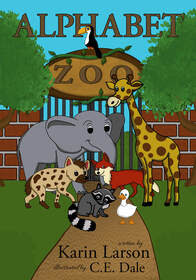
From letters A to Z
furry faces are here to see. 
Living in cages and ponds
or feathered friends in a tree, 
explore a zoo of exciting animals
from land, air, and sea. 


ABCs from the Bible helps children learn the alphabet using examples tied to the Bible. The author's words and the artist's illustrations bring the ABCs to life. The back pages give more information for adults to share with their youngsters.


The teacher’s idea for celebrating the 100th day of school excites everyone. While the other students share their ideas for 100 unique things, Freckle Face Fred doesn’t. Join the celebration to discover what Fred finds unique.


Have you ever seen anything besides rain, hail, or snow fall from the sky? When the Sky Falls, Duck takes you on a trip to all kinds of places and shows you unusual things that have fallen from the sky and explains why.


Concepcion loves TV, but she has to sit close to see the screen. She holds her books close to her face to read. Her teacher seats her in the front row to copy her spelling words from the blackboard. When she gets a chance to look through her Papa's glasses, she decides that must be the answer. She wants to get glasses so she can see better. But first her eyes need to be tested, a new experience to be faced."


Eleven-year-old Kate Taylor dreams of being the star of her basketball team, Angels. When Kate's tooth is knocked out at one of the games, and her mother, who is also her coach, says she can't play until the tooth the dentist replants heals, Kate's dreams are in jeopardy. Add Emily, the new girl at school who claims she's the best, and Kate faces a challenge to prove that she is the star. ​

Will Kate succeed? Or will Emily ruin Kate's plans?

To purchase these and other titles from 4RV Publishing, please visit our online catalog at http://www.4rvpublishing.com/full-book-cover-catalog.html 

Tuesday, August 8, 2023

Marketing Plan for Holiday Season Book Selling


Vivian's post about attending book fairs, festivals, and craft shows reminded me that fall is coming, and before we know it, the holidays will be here. It is estimated that one in four books is sold during the holiday season. 

Have you started your holiday season marketing plan? If not, here are some ideas to get you started. 

  • Make sure all your book descriptions are current 
  • Update your author bio
  • Verify links to purchase your books are operational (broken links disappoint potential readers)
  • Schedule your social media posts in weekly or monthly blocks
  • Plan emails to your readers with giveaways for their loyal readership
  • Check your local paper for selling opportunities like craft fairs 
  • Prepare a budget for paid advertising
  • Order your book supply for events early so that you have them in time 
  • Create or order promotional materials for events ahead of time
Making sure you have a plan and ordering books and supplies early will help you have a successful holiday book selling season.  


Cheryl C. Malandrinos is a freelance writer and editor. She is the author of four children’s books including, A Christmas Kindness, released by 4RV Publishing. A blogger and book reviewer, she lives in Massachusetts with her husband and three adult children. Visit Cheryl's website at https://ccmalandrinos.com or her children’s book blog at https://childrensandteensbookconnection.wordpress.com
Tuesday, July 25, 2023

Summer Reading with 4RV Publishing


One of the recommended ways to stop the summer slide--a loss of learning gains during the summer months--is for your child to read at least 20 minutes a day. Here are some reading suggestions from the 4RV Publishing Bookstore


Simon thinks his skin is bo-rrring. Simon doesn't like boring. So, he “tries on” different skins, and to his surprise, each comes with its own challenge. Simon soon makes a pleasant discovery about his own skin.


Irma wanted a puppy, a pet she could take on walks, not a few stupid guppies. Fish don't do anything, except roll over on their backs if they die. Sometimes, though, a girl has to make the most of what she has. Now, what can Irma do with three guppies besides stare at them as they stare at her.


A young duck, who enjoys things like riding waves, can become quite lonely. Louie didn’t have any friends except two cousins, who didn’t like to ride waves. When Mr. and Mrs. Goose’s grandson, Gus, comes to live with them, Louie promises Mrs. Goose that he will be Gus’ friend. But, can Louie finally have a friend, one who doesn’t think he’s odd because he is different? Can being different be all right?


From letters
furry faces are here to see.

Living in cages and ponds
or feathered friends in a tree,

explore a zoo of exciting animals
from land, air, and sea.


No one called her anything but Dog, but she had food, water, and a warm place. She got to go for rides with the wind blowing in her face. She had a boy who played with her. She was happy.

One day, the man said, “Come on, Dog, let’s go for a ride.”

She ran and jumped through the open door onto the back seat. She thought maybe they would go to the dog park. How exciting.

When the car stopped, the man got out and opened the door. “Get out, Dog.”

She jumped out and sat waiting, but he told her to stay and climbed back into the car and drove away. 

She barked and ran after the car.

The car drove too fast for her to catch.

She sat and waited. No one came back. She grew hungry and cold and afraid. What could she do? Why didn’t her people want her anymore? What would happen to her?


Eleven-year-old Kate Taylor dreams of being the star of her basketball team, Angels. When Kate's tooth is knocked out at one of the games, and her mother, who is also her coach, says she can't play until the tooth the dentist replants heals, Kate's dreams are in jeopardy. Add Emily, the new girl at school who claims she's the best, and Kate faces a challenge to prove that she is the star. ​

Will Kate succeed? Or will Emily ruin Kate's plans?

To learn more about these and other books by 4RV Publishing , please visit us online at http://www.4rvpublishing.com

Sunday, July 16, 2023

Congratulations to 4RV Publishing's President Vivian Zabel for Cupid Awards Win!


Please join us in congratulating Vivian Zabel, President of 4RV Publishing, on her recent Cupid Awards win! The Cupid Awards are overseen by the Oklahoma Romance Writers Guild. Zabel's unpublished short story, "And the Winner is..." took the top honor in the Non-romance with Strong Romantic Plot category. 

To learn more about Vivian and her books, please visit her website at http://www.vivianzabel.website or her author page on the 4RV Publishing website at http://www.4rvpublishing.com/vivian-zabel.html

Tuesday, July 11, 2023

Writing Superpowers - Foreshadowing & Eliminating Inconsistencies


Today, we wrap up our conversation about writing superpowers. Let's discuss ways to keep readers engaged when characters act out of character and how eliminating inconsistencies in a manuscript creates a better story.  

Have you ever been fully into a book when suddenly your main character does something you would never expect? Does it make you sit up and say, "What just happened? They would never do that!" 

Why do readers feel taken aback when a character acts "out of character?" 

First, readers feel a connection with the main character. They invest time and energy in getting to know that character's thoughts, actions, and motivations. The connection breaks when the character acts in a way they don't expect. An interruption in an established pattern can lead readers to feel betrayed. 

Second, unexpected behavior can seem random if it's not properly foreshadowed. 

Foreshadowing provides a hint of what is coming. Whether it be direct foreshadowing that openly suggests a problem or plot twist, or indirect foreshadowing that drops clues that lead to a revelation for the reader, recommended rules are that foreshadowing be relevant to the plot, subtle so that it creates anticipation or suspense, and properly timed so the reveal is satisfying to readers. 

For eliminating inconsistencies, type out character worksheets and a brief or detailed outline. The spelling of characters' names and their physical descriptions can be as hard to keep track of over a 250+ page novel as the sequence of events from beginning to end. Draw a simple map to remember where each building in your fictional town is located (especially important if you're planning a series). 

How did you enjoy traveling through these writing superpowers? Is there another topic you would like us to cover? Just for fun, are you a plotter or a panster? 


Cheryl C. Malandrinos is a freelance writer and editor. She is the author of four children’s books including, A Christmas Kindness, released by 4RV Publishing. A blogger and book reviewer, she lives in Massachusetts with her husband and three adult children. Visit Cheryl's website at https://ccmalandrinos.com or her children’s book blog at https://childrensandteensbookconnection.wordpress.com

Wednesday, June 28, 2023

Writing Superpowers - Point of View


Today, we continue our conversation about writing superpowers. I'm a huge fan of deep point of view. As a reader, I like to get inside my character's heads and figure out why they act the way they do. That's why it's easy for me to find unintended point of view shifts in manuscripts I edit.

What is point of view?

As Merriam-Webster defines it, point of view determines who is telling the story and what the narrator's relationship is to the characters in the story. The most common points of view are: first person, second person, third person limited, and third person omniscient. Let's look at each of these. 

First Person - narrator is a person in the story

Since the narrator is a character in the story, the reader experiences the events that unfold from their point of view. This creates a close and immediate connection between narrator and reader. It is, however, limited to what the narrator sees, and their descriptions can be tainted by their mood, experiences, and opinions. This point of view also lends itself to exposition and summarization instead of fully developed scenes.

Example: Phlegm rattles in my throat. Each breath claws at my chest, burdened by the weight of my ragged coughs. Beads of sweat trace fiery trails down my cheeks, as if the scorching prairie sun lives inside me. I can’t stop now. John needs the money tomorrow.

Second Person - narrator is speaking directly to the reader 

Second person point of view allows the reader to become a character in the story. Just like first person, second person creates a close connection between narrator and reader. Where they differ is in first person, the reader experiences the story through the narrator's eyes, but in second person, the reader experiences the story through their own eyes. 

The challenge with this point of view is that the writer must create a character any reader can relate to or see themselves as being. Though it can create a close connection between narrator and reader, sometimes, it is more distancing to the reader. 

Example: Phlegm rattles in your throat. Each breath claws at your chest, burdened by the weight of your ragged coughs. Beads of sweat trace fiery trails down your cheeks, as if the scorching prairie sun lives inside you. You can’t stop now, you think. John needs the money tomorrow.

Third Person Limited - narrator tells the story from a single character's point of view

In third person limited, the reader is told a story from a single character's point of view. All the narrator knows are the thoughts and feelings of the protagonist. The story develops around this main character. It can be more distancing to the reader, who is limited to the experiences of this one character. 

Example: Phlegm rattled in his throat. Each breath clawed at his chest, burdened by the weight of his ragged coughs. Beads of sweat traced fiery trails down his cheeks, as if the scorching prairie sun lived inside him. I can’t stop now, he thought. John needs the money tomorrow. 

Third Person Omniscient - narrator knows everything

In third person omniscient, the narrator can share the entire story without the bias of a single character's point of view. They can have their own voice and can share details they know that the characters might not be aware of. While this point of view offers flexibility to the writer, it can distance the reader. And, hopping from character to character can create confusion. 

Example: Phlegm rattled in his throat. Each breath clawed at his chest, burdened by the weight of his ragged coughs. Beads of sweat traced fiery trails down his cheeks, as if the scorching prairie sun lived inside him. He couldn't stop now. John needed the money tomorrow.  

What is your favorite point of view to read and to write? What are your biggest struggles with writing from your chosen point of view?


Cheryl C. Malandrinos is a freelance writer and editor. She is the author of four children’s books including, A Christmas Kindness, released by 4RV Publishing. A blogger and book reviewer, she lives in Massachusetts with her husband and three adult children. Visit Cheryl's website at https://ccmalandrinos.com or her children’s book blog at https://childrensandteensbookconnection.wordpress.com

Tuesday, June 13, 2023

Writing Superpowers - Dialogue


The hosts of a kidlit podcast spoke about how their superpowers helped them in working with author clients. That conversation got me to thinking about what I might say are my superpowers and how they help the authors I work for as an editor. We will look at my three superpowers over the next few weeks. 

I write good dialogue.

It might take a few drafts to get there, but the final copy flows naturally. It isn't interrupted by useless tags, doesn't dump a whole bunch of information on the reader, and makes each character unique.

Let's talk about dialogue for a moment. Here is a typical conversation you might have as you enter a meeting with a colleague.

"Hello," I said.

"Hey," my colleague responded.

I ask, "How are you doing?"

"Okay," he said. "You?"

"Fine." I sat down in my chair.

"Did you read the materials Mary emailed to us?" he asked.

Nodding, I replied, "Yes. Hope we aren't here for too long."

"It will take as long as it takes." 

Mary entered the boardroom. "Great, you're both here. Let's get started. We might have to order lunch in." 

"Wonderful," I replied. 

Could you make it through this passage without yawning? 

Dialogue isn't boring everyday speech. It serves a purpose: to move the story along and engage the reader. Unlike the example above, greetings and small talk are often eliminated because they don't serve that purpose.

Tags help identify who is speaking to the reader, but too many "he said" and "she said" tags interrupt the flow of engaging dialogue. Renowned author Jerry Jenkins once rewrote a book by incorporating actions and descriptions to attribute dialogue to characters instead of using the "he said/she said" tags. 

Side note: In writing, we may change up said with other words: exclaimed, grumbled, and my all-time favorite, smiled. Have you ever tried to talk while you're smiling? Said often goes unnoticed by the reader, who is focusing on what the character is saying, which is why it is the preferred tag. Let your characters' actions communicate their emotions.

Dialogue shouldn't dump a bunch of information on the reader. I once read a Civil War novel about two brothers that spent pages and pages having characters share stories about the current conflict. Instead of moving the story along, this info dump distanced me from the characters. By the end of the novel, I felt I really didn't know the brothers at all. Any information that is communicated through dialogue needs to move the story forward. 

Good dialogue, when blended with action--and sometimes intentional inaction--helps you to create unique characters. While a character's dialect or accent can make them stand out, pitch, volume, and tone are equally important. Other things to consider:
  • Setting and background can influence how characters speak.
  • Personality influences how they speak.
  • The way characters speak could change depending upon the situation they are in.

Let's look at the interaction from earlier, with small talk eliminated and more action and dialogue that moves the story forward.

Mark peered over the screen of his laptop where he had been tip-tapping away, to flash me a smile. His fluorescent white teeth made me squint. “Did you read the materials Mary emailed to us?”

Marching to the opposite side of the room, I slid the laptop bag off my creaky, middle-aged shoulder and placed my belongings on the table. My lips curled into a sneer. “Yes. Hope we aren’t here for too long.”

“My, my, my,” he said. “Someone forgot their gratitudes and affirmations this morning.” 

Mary waltzed in before I could respond. “Great, you’re both here. Let’s get started.” She tapped the pile of client folders she had carried in. “We might have to order in for lunch.” 

My fingers curled around my cup of tea. “Wonderful.” I hope Mark is available to pick up the kids from school. 


Does this version give you a totally different idea of what is going on here? Does it change how you view the characters' relationship? Do you see some personality shining through? Is it more engaging? Another edit or two and it might find its way into a story. 

What is one of your writing superpowers? What do you like best about writing dialogue? What are your biggest struggles with writing dialogue?


Cheryl C. Malandrinos is a freelance writer and editor. She is the author of four children’s books including, A Christmas Kindness, released by 4RV Publishing. A blogger and book reviewer, she lives in Massachusetts with her husband and three adult children. Visit Cheryl's website at https://ccmalandrinos.com or her children’s book blog at https://childrensandteensbookconnection.wordpress.com

Sunday, November 6, 2022

How to Give Basic Writing Advice


Contributed by Karen Cioffi, Children's Writer

 A while ago, I was asked to look over a children’s fiction picture book manuscript. This was not a paying job, just a favor.

The ‘new to writing’ authors, who are both health care professionals, had already been calling major publishers to find out submission requirements. They were told their manuscript would not be looked at without an agent.

So, they went to the library to find a book on top agents.

While this is a worthy endeavor, there are some basic first steps to take before shooting for the stars.

Just glancing at the manuscript, I knew it needed a lot of work. And interestingly, I was surprised to see so many errors in a simple 600-word story.

It seems as we progress in learning the craft of writing, we forget that we didn’t know the very basics at one time either.

So then, I had to figure out what to say to the authors without alienating them or totally discouraging them.

When critiquing or giving writing advice, it’s important to begin with the positive aspects of the manuscript. If the errors are basic and there are a lot of them, you may also want to state them in generic terms, not to offend the author/s.

What does this mean?

Well, it’s not a good idea to say, “You shouldn’t have the children’s picture book manuscript formatted in lists, numbered, or in Australian Sunrise 10pt font.”

Instead, you might say, “Manuscripts are usually preferred typed in New Times Roman 12pt font, and are double spaced using a free form flow with the first sentence of each paragraph indented.

See the difference?

To help with clarity, you could include a first page example of a manuscript you have, or rewrite the 1st paragraph of the authors’ manuscript.

If there are just too many errors, for time’s sake you can make a list of proper manuscript formatting tips. This is the approach I took.

I started out with the ‘positive:’

This is a wonderful idea for a children’s book and has great potential, especially that both of you are professionals in the health field. Children will certainly benefit from the story’s information. It could use some tweaking, though.

Then I added the following:

Here are a few tips for writing and formatting a manuscript to help get it submission ready:

•    Manuscripts should be formatted in 12 pt Times New Roman Font
•    They should be double spaced
•    They should be in free form without numbering for pages or in list form
•    The first sentence of each paragraph should be indented
•    Children love action – actions are better shown through ‘showing’ rather than ‘telling’
•    Notes for illustrations after each of your intended pages are usually frowned upon by publishers
•    Most publishers, especially the major ones use their own illustrators
•    Manuscripts are more likely to make it past the slush pile if they are polished
•    Usually writers go through a process of one or two critique groups and writing groups. After rewrites and editing it gets to a point where it looks perfect. That’s when it needs to be professionally edited.

These tips are part of the advice I offered the authors and I kept it as generic as possible.

After you note the manuscript errors, you should end your advice on another positive note. You might say, “With rewriting and editing, you will have an engaging story that children will be sure to love, and it’ll be submission ready.”

I then provided several writing links about writing for children and editing.

Since every author’s personality is different it’s usually best to use the gentle approach when offering writing advice.

ABOUT THE AUTHOR


Karen Cioffi is an award-winning children’s author and children’s ghostwriter, rewriter, and coach with clients worldwide. She is also the founder and editor-in-chief of Writers on the Move and an author online platform instructor with WOW! Women on Writing.

Karen’s children’s books include “Walking Through Walls” and “The Case of the Stranded Bear.” She also has a DIY book, “How to Write Children’s Fiction Books.” You can check them out at: https://karencioffiwritingforchildren.com/karens-books/. If you need help with your children’s story, visit: https://karencioffiwritingforchildren.com.  


Tuesday, October 11, 2022

Submissions Wanted: Acquisitions Editor Cheryl C. Malandrinos Shares Her Wish List


Earlier this year, the 4RV editing team connected over Zoom during one of their Between the Covers of 4RV sessions to chat with readers about what they would love to see for submissions. Here is my short list:

  • Southern fiction - especially involving family secrets and the rich history of the South
Since 2007, Southern fiction has been one of my favorite genres. The rich history of the South lends itself to marvellous stories. I also enjoy stories involving family secrets. I'm not opposed to ghosts in these stories, but I am also okay if no ghosts are involved. 

Authors/books in this genre that I've read: Rhett DeVane, Karen White, G.K. Davenport (whose debut novel, Dust of Lies, I was blessed to edit), Property by Valerie Martin, and Stella by Starlight by Sharon M. Draper.

  • Middle Grade/Tween/Young Adult paranormal mystery-solving friends
I grew up a huge lover of Scooby-Doo, and mystery remains one of my favorite genres. Most of the mysteries I read don't include a paranormal element, but they are popular in these age groups. The most important thing to note is that these mystery solvers and their storyline must be uniquely you. I would love to see underrepresented voices in these stories. Some humor would be great, and a dabble of romance for older readers. 

Authors/books in this genre I've read: The Crypto-Capers series by Renee Hand, the Gus LeGarde Mystery series by Aaron Paul Lazar, The Case of the Haunted History Museum by Steve Brezenoff, and A Properly Unhaunted Place by William Alexander.

  • Christian historical fiction featuring a fictional or Biblical female lead 
This is a broad idea, so let me see if I can focus it for you. The fictional lives of Biblical women intrigue me because they allow me to explore my love of Bible history and help me better understand these women of faith. Michal, the daughter or Saul and wife of David, featured in The Secret Life of Kings by Yochi Brandes and Mary, Called Magdalene by Margaret George, come to mind. 

However, I love Christian historical fiction set during almost any time period with fictional lead characters as well. Christian/inspirational romance also catches my eye. 

Authors/books in these genres that I've read: Kathi Macias, the Crossroads of Grace series by Allison Pittman, and The American Patriot Series by J. M. Hochstetler.

  • Historical fiction set during Colonial America or the American Civil War
These are times in American history that I am most familiar with, having studied them in college. I also read more historical fiction set during these time periods than any other. For younger readers, I like a time travel element where the characters travel back in time to solve a problem. For adults, I enjoy a good spy story, characters whose stories unfold against the backdrop of battles, or escape to freedom stories. Attention to historical detail is a must. However, no graphic violence or intimate physical scenes should be portrayed.* 

Authors/books in this genre I've read: Revolutionary War on Wednesday (Magic Treehouse Series) by Mary Pope Osborne, George Washington's Spy by Elvira Wooddruff, The Civil War Trilogy by Michael and Jeff Shaara (*see note above), and Wench by Dolen Perkins-Valdez. 

You can view the entire Between the Covers of 4RV - What Editors Want on Youtube at https://youtu.be/W7ITlUoImwo


Cheryl C. Malandrinos is a freelance writer and editor. She is the author of four children’s books including, A Christmas Kindness, released by 4RV Publishing. A blogger and book reviewer, she lives in Massachusetts with her husband and three adult children. Visit Cheryl's children’s book blog at https://childrensandteensbookconnection.wordpress.com

Tuesday, February 22, 2022

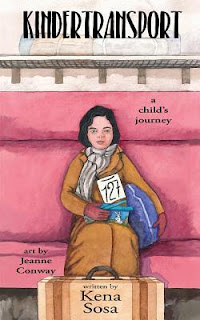
Review: Kindertransport by Kena Sosa


Kindertransport 
by Kena Sosa, illustrated by Jeanne Conway
Review by Cheryl C. Malandrinos

Kindertransport by Kena Sosa is the touching story of a young Jewish girl in Germany who gets onboard the Kindertransport train headed for England.

In the days before the outbreak of World War II, Helen finds herself trapped inside her house. Unable to understand why her family’s life has changed so suddenly, she worries as Vater’s mood changes and Mutter pretends she doesn’t like eggs simply so Helen will have enough to eat. Then one day, Mutter tells her to pack her suitcase so she can ride a train that will bring her to England until the danger is over.

Sosa has done a fabulous job of bringing to life the experiences of so many Jewish children in the days before the war started. She captures the emotions, the frustrations, the uncertainty Helen feels as life has changed. I’m sure the interviews she conducted with Jewish survivors helped flesh out the details, and it is that research that allowed her to create such an incredible story. An afterword shares more about Kindertransport, and a list of materials used in the research for the book is included.

Accompanying Sosa’s moving text are the black and white illustrations by Jeanne Conway. The burning of Vater’s bookstore, how Helen clings to her bunny as she packs, and the hope Helen feels as she holds on to the ship’s railing on her way to England are all brought to life by Conway. 

Kindertransport might be one of the most stirring books I read this year. I highly recommend it to readers everywhere.


Kindertransport and other books by Kena Sosa are available at https://www.4rvpublishing.com/kena-sosa.html and other online retailers. 

Wednesday, January 26, 2022

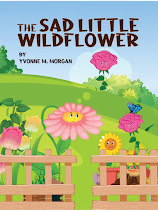
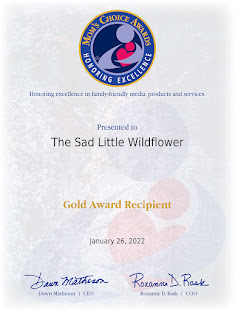
Sad Little Wildflower wins Mom's Choice Gold Award

      4RV author Yvonne Morgan's children's book The Sad Little Wildflower received the Mom's Choice Gold Award. The The Mom's Choice Awards evaluates products and services created for children, families and educators. The program is globally recognized for establishing the benchmark of excellence in family-friendly media, products and services. The organization is based in the United States and has reviewed thousands of items from more than 55 countries.

     The Sad Little Wildflower is Yvonne's first children's book published through 4RV. Her second is ABCs from the Bible.  She also has a memoir of her mission work, Turning Mountains into Mole Hills, published by the company. Her third children's book is in the designing stage of publication.

    Copies of her books can be bought through the 4RV Website, as well as signed by her if ordered from her website, and from other bookstores and online sites.