Wednesday, May 13, 2020

5 Tips for Coordinating a Virtual Book Tour


Coordinating a virtual book tour can intimidate an author. It takes organization and time management skills to get the most out of your tour. You’re also looking to build relationships with bloggers and readers so they support you throughout your career. Let’s look at five tips for coordinating a virtual book tour.

Be Organized

I managed nearly 100 authors spanning over 125 books when I coordinated virtual book tours. Those years taught me the importance of organization.
  • Have your marketing materials together before you solicit tour hosts.
  • Use an Excel Spreadsheet or Google Sheets to maintain a database of all review, interview, and guest post requests. Create a column to show whether you mailed the printed copy out, so you can follow up with the blogger in a week to make sure it arrived.
  • Pre-order thank you cards or create an electronic thank you message prior to the tour so you can thank your hosts once the tour ends.

Include a Note with Printed Books

Bloggers can receive dozens of books to review each month. Losing track of a book happens. Do yourself, and the reviewer, a favor by including a note and printed marketing material in the envelope. This will avoid confusion for the tour host as to where the book comes from and if the review is time sensitive.

When I mail out my books, I include a personal note to the blogger, mentioning the book tour and the date they agreed to host me. I also ask for a prompt email if they cannot keep the scheduled date.

Complete to-do Items Early

Tracking down missing to-do items creates frustration for a virtual book tour host. Don’t be that last-minute author.

Plan your schedule so you can complete and return to-do items a minimum of two weeks prior to your tour stop. This will give the blogger time to review your submission to be sure its complete and to ask for clarification when necessary. Not only will this give your host the chance to schedule it ahead of time, once your next book comes out they will be more willing to host you again.

Leave Comments at Your Blog Stops

We all lead busy lives, but if you want to show your tour hosts how much you appreciate what they do, take a few moments to leave a comment on the day your interview, guest post, or review appears on their blog. Interact with readers who leave comments. They are often bloggers, too, so nurturing those relationships is important.

No comments? Try not to get discouraged. That doesn’t mean lack of interest. Sometimes people just have nothing to say. However, always thank your host.

Promote Your Virtual Book Tour

Why go through all the effort to coordinate a virtual book tour if you will not promote it? Even those authors who pay a company to coordinate a virtual book tour should have a hand in promoting their tour stops because it expands your reach.

Blogger Jodi hosts Author Sam on her blog. Blogger Jodi promotes the tour stop to her social media accounts of 3,000 friends/followers. Author Sam promotes the tour stops to his social media accounts of 5,000 friends/followers. Now, Author Sam has reached 8,000 people instead of just 3,000; plus when their people share the post Author Sam’s reach increases again.

Virtual book tours are fun, but they require time and work to be successful. Following these tips will make it easier.


Cheryl C. Malandrinos is a freelance writer and editor. She is the author of four children’s books including, A Christmas Kindness, released by 4RV Publishing. A blogger and book reviewer, she lives in Massachusetts with her husband and two daughters. She also has a son who is married. Visit Cheryl online at http://ccmalandrinos.com and her children’s book blog at https://childrensandteensbookconnection.wordpress.com

Sunday, May 3, 2020

4 Writing Tips on Using Descriptions


Contributed by Karen Cioffi

Using descriptions can be a powerful writing tool. The most important thing to keep in mind is to use your imagination. Close your eyes and picture what your character is doing. Picture what the scene looks like then paint it with words.

Below are four tips to help you get a handle on writing descriptions.

1. You’ve got to engage your readers.

How do you do this? By showing them what’s going on.

Let the reader:

- Smell what the character is smelling.
- Hear what the character is hearing.
- See what the character sees.
- Feel what the character is touching.
- Taste what the character is tasting.

Let the reader feel like she’s there. Use your character’s senses to describe (show) what’s going on.

2. Use descriptions in action scenes.

Using an excerpt from Walking Through Walls, I could have said just said it was hot. But that wouldn’t show how hot it was for the protagonist, Wang.

The sun beat down on the field. Sweat poured from the back of his neck drenching the cotton shirt he wore. "I hate doing this work." He hurled the bundles on a cart.

I used description to show the action scene. This helps engage the reader.

3. Use description to emphasis the scene.

While you should write tight, sometimes it’s powerful to use description to bring the reader into the scene. In the excerpt below, the protagonist of Walking Through Walls is on a path that could change his life forever:

Deep in thought Wang did not notice the black cat that crossed his path, or the black raven that swooped and almost landed on his head. He did not even notice the silver snake with the purple tail that slithered along beside him on the road. Wang only noticed that each step took him closer to the merchant’s home and the beginning of the road leading to his destiny.

I could have simply used a version of the last sentence to say he didn’t notice anything. But, this wouldn’t allow the reader to know what was going on around him - how absorbed he was in fulfilling his dream. It wouldn’t bring the reader into the scene.

In addition, the description used for that scene is brought up later in the story. So, it’s also helping move the story forward.

4. Don’t use description dumps.

While it’s essential to use descriptions in your writing, you don’t want to overdo it. And, you don’t want to give description dumps.

What this means is avoid going beyond what's needed to engage. Yes, authors did it years ago – they’d elaborate on descriptions for pages and pages. And, I would think it gave the writer a sense of freedom to be able to describe in full detail what she was imagining - not having to worry about tight writing. But, it won’t fly today.

Today it’s about writing ‘lean and mean.’ It’s about thinking carefully about your word choices, your descriptions, and your character’s backstory. If you can say it effectively in two words rather than six, do it in two.

It’s about making sure everything thing in your story is moving the story forward. No sidetracking for a beautiful description. No sidetracking for over elaborating.

Weigh what will work and what is too much. Use balance in writing descriptions in your story.

------


Karen Cioffi is an award-winning children’s author, successful children’s ghostwriter, and author online platform instructor with WOW! Women on Writing. Check out her middle-grade book, WALKING THROUGH WALLS.

You can connect with Karen at:
LinkedIn  http://www.linkedin.com/in/karencioffiventrice

Friday, April 24, 2020

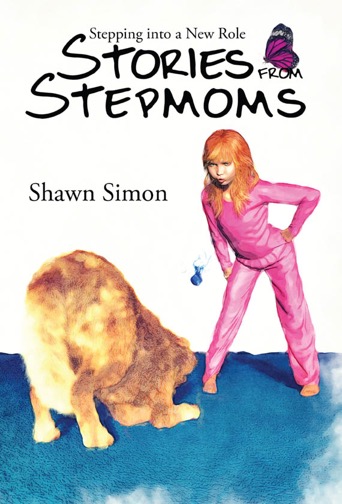
4RV Release: Stepping into a New Role: Stories from Stepmoms


Shawn Simon


Shawn Simon


            4RV Publishing's newest release is the nonfiction book Stepping into a New Role: Stories from Stepmoms by Shawn Simon. 

            Anyone who thinks becoming a stepmom would be easy has a surprise waiting for her, the same surprise the author did.  

Author Shawn Siimon thought being a stepmom would be easy until her stepdaughter spit on her dog. Then, she decided to make it her mission to meet other stepmoms and hear their stories. Once she did, she felt supported and no longer alone. Sharing those stories became a stepmom support group in writing.

This book, a collection of stories from stepmoms, contains tales of inspiration, triumph, tribulations, and joys of being a stepmom.


As Craig Shoemaker (Comedian of the Year from the American Comedy Awards, ABC, and two-time Emmy Winner, NATAS) states: The world of step-parenting is rarely explored. It must be similar to maiden voyages by explorers in the 1400’s. It’s scary, treacherous, and sometimes painful. But if we have a guide book, such as the one Shawn wrote, the new world can be bright and beautiful. Thank you for being our Step-Navigator!


Wednesday, April 22, 2020

Marketing -- a Must Part of Publishing


            Most people don't recognize marketing as a part of publishing, but it is. Once a publisher accepts a manuscript or an author decides to self-published, marketing on the part of an author (and an illustrator) needs to begin.

         Somehow someway, the rumor that an author's job ends once a manuscript goes to press spread throughout the world. However, nothing could be farther from the truth. Remember, authors and illustrators are the best promoters of their books. If an author like James Patterson has to promote his books, those of us not as well known or as popular must promote even more.

         Below is a list of ideas whose sole purpose is to assist authors and illustrators in their marketing efforts. No one needs to try all the ideas but should try several. If some don't work, try something else. However, a few are needed, such as numbers 1, 8, 9, and 12.

1. Promote on Facebook and other on-line social media. (Contracts state authors should have a blog, a website, and be at least on Facebook.) Get that website up and running -- before the book is released.

2. Send handwritten notes, cards, or greeting cards to inform friends or the public of your new book or existing books as well as any appearances you are making.

3. Use handwritten fonts as an alternative to actually handwriting cards.

4. Use Sendoutcards.com or a similar medium as a way to contact others.

5. Search out and enter contests. Researching online is one way to find contests. OWFI has a writing competition every year (owfi.org).

6. Join the Chamber of Commerce and use its networking opportunities.

7. Promote your book on radio, t.v. spots, and/or talk shows.

8. Talk to your librarians about purchasing your book for their shelves or fill out a book request. The library will often purchase that book after the request. Also, have friends and relatives request your book at their local libraries.

9. Have a giveaway once in a while. There are different ways to do this. Be creative. B.J. Daniels gives away special bookmarks, magnets, aprons, and other mementos of her books. Personally, I prefer not to give away a current book, but if you have previous books, you might give away one or more of them to build an interest in your new book.

10. Set up a booth in art, crafts, street, or book festivals. Sell your books directly. Authors and illustrators usually make more by buying their books at a discount, selling at retail (or slightly lower), and pocketing the profit.

11. Donate a copy of your book to one or more local schools and get media coverage, even if in a small local paper.

12. Write a very short story about one or two of your book characters and post it on your blog or other places as a FREE item, a lead-in, or attention-getter for your book.

13. Build your name's brand, or that of your book, by giving away pencils or pens with your name and email address on them, bottles of water, bookmarks, postcards, etc. Always have business cards to give away.

14. You should provide information (links) on social media and on handouts such as fliers and postcards so that people know where to find your book or books.

15. Prepare postcard-sized inserts with your autograph to place in each book: On the card, have your photo, brief info about books, and a polite request for the reader to place a rating and brief review on Amazon if book pleased reader.

16. Prepare and keep an event diary for annual events in which you are interested in participating. In that digital or hard-copy diary, keep a compilation of press releases, press clippings, email blasts, photos, marketing materials, a monthly to-do lists, and anything else that would be helpful for you to plan the next year's attendance or that would be helpful for the next year's publicity person. For example, OWFI has a conference annually. If you attend, speak at that conference, and/or have your book or books in their conference bookstore, then have an event diary for that event.

17. Don't write just one press release. Customize the release for each specific media. A different slant is needed for media out of town than for local media.

18. Promote your book at least 3-4 months before it's released officially. This idea may not work or be wanted for every book, but it will help for some books.

19. Find local places to host a book signing for you and/or to carry your book(s). For example, a book about sports might grab the interest of a sporting goods store; a book about dolls might interest a toy store; a book about a dog or cat or other pet might interest a pet store.

20. Have a guest book for people stopping by your booth at an event. Be sure visitors write their emails so you can send messages (with a way for the recipients to "opt-out" of receiving more emails) go share writing tips and information about upcoming events or books.

21. Be aware of opportunities to promote your book.
For example, one 4RV author carries a copy of her book and another book to read with her. While waiting for an appointment or for a friend, she reads the extra book and looks around to see if anyone else is reading. When she sees a person reading, she asks the person the title of the book. She tells the person she is an author and is interested in what people like to read. That short conversation provides an opportunity for her to talk about her books. She doesn’t always sell a book, but she can give the person a business card and flier about her books.

         Finally, search for other ideas to promote your book. Be creative, but don't be afraid to "borrow" ideas from others. You are the best person to promote your book because you know it better than anyone else. Be proud of your "baby" and present it to the world. You may not be a James Patterson, yet, but you can promote as hard as he does.


Wednesday, April 8, 2020

Turning Busy Time into Productive Time


You all know the busy bee. No matter what day you ask, she’s busy.  If you ask how she’s doing, she’ll provide a laundry list of things left undone that she’s working on. 

Problem is: next week her laundry list will probably be the same … or worse. 

Why?  Because she’s busy, not productive.

Just because we have a lot to accomplish, doesn’t mean we are approaching our to-do list in a productive manner. In order to be productive, you have to make progress. Busy bees don’t. They flit around in all directions until they feel so overwhelmed they procrastinate. 

How can you stop the busy bee syndrome?  Here are some great ways to get you started.

Set S.M.A.R.T. Goals

Setting S.M.A.R.T. goals is the first step toward turning busy time into productive time. S.M.A.R.T. goals are ones that are: specific, measurable, attainable, realistic, and timely.  For more information on setting S.M.A.R.T. goals, you can view this video.

The reason goal setting is so important to productivity is that you need to focus on what you need to accomplish. Without a plan, you’re like a driver trying to maneuver a car without a steering wheel; you have no control over where the car is going and eventually you will crash. 

Prioritize Your Goals

Just like you wouldn’t put slacks on before your underwear, you shouldn’t try to attack your goals without prioritizing them first. 

Review your goals and consider which ones you need to work on first. Deadlines help you prioritize goals, but when you accept a new project with a closer deadline, you need to consider if this is a new or repeat client and what the future impact might be on your career when accepting this new project if it impacts other deadlines. 

If you are working on a project without a solid deadline, create measurable and timely tasks to keep you on track.

Write a To-do List

You’ve set your goals and prioritized them. Now, you need to break them down into monthly or weekly to-do lists. 

The first thing a to-do list does is give you a way to focus on smaller tasks so that the larger goal doesn’t seem so daunting. A to-do list also allows you to feel a sense of accomplishment when you check off a completed item — which is a huge source of motivation. 

After using to-do lists for several weeks or months, you’ll also be able to better gauge how much you can truly accomplish during a specific time period. While it might vary depending upon the size and complexity of the projects you are working on, it will still give you a good overall picture of whether your writing schedule is working. 

Create a Writing Schedule That Works for You

Speaking of writing schedules, you need to create one that works best for you. If you’re more productive in the morning, then that’s when you should be writing. I realize my most productive hours are after 9 pm, so when my girls were younger I would wait until they went to bed to sit down to work.

For those who can’t write during their ideal time frame because of other commitments, use lunch hours and wait times before doctor appointments to increase productivity.

Track Your Time

Allowing distractions like email, your phone, and the Internet to steal your writing time will leave you feeling overwhelmed when faced with a deadline. Letting family and friends invade the time you’ve put aside for writing will also keep you busier than normal. On the reverse side, taking time dedicated to family and using it to catch up on writing projects can leave your family feeling resentful of your career. 

Take out a pen and pad or create a spreadsheet to track your time for the next five days. This will help identify exactly how much time you spend on each task and where time is wasted. Identifying what distractions and interruptions keep you from obtaining your goals will help you eliminate them. 

Keep a careful eye on how much time you spend working on projects where you just couldn’t say, “no.” Volunteering in your community and taking on special assignments can often make you feel good, but if you commit to more than you can realistically handle, you’ll soon feel the pressure and  procrastinate. 

Setting S.M.A.R.T. goals and prioritizing them, maintaining to-do lists, creating a writing schedule that works best for you, and tracking your time will help you be productive rather than chronically busy.

Cheryl C. Malandrinos is a freelance writer and editor. She is the author of four children’s books including, A Christmas Kindness, released by 4RV Publishing. A blogger and book reviewer, she lives in Massachusetts with her husband and two daughters. She also has a son who is married. Visit Cheryl online at http://ccmalandrinos.com and her children’s book blog at https://childrensandteensbookconnection.wordpress.com