Foreshadowing is a literary device used to make the reader wonder. It gives the story a sense of mystery or anticipation. It can also create tension.
According to Literary Devices (1), using this device, “a writer gives an advance hint of what is to come later in the story."
Foreshadowing is a great device to keep the reader involved in the story and the characters.
There are a number of foreshadowing strategies. Below are four of them.
An Approaching Event
An example of this type of foreshadowing is in “Walking Through Walls.” Wang (the protagonist) listens as his friend, Chen, tell how neighboring warriors kidnapped his sister.
The reader surmises or anticipates that there will be an upcoming battle to rescue Chen’s sister.
The Pre-scene
A pre-scene hints at something on the horizon.
Another example might be a new student entering a classroom and another student eyes him up and down. Nothing else happens in that particular scene.
The reader automatically anticipates there will be trouble between the boys down the road.
In an article at Novel Writing Help, “a pre-scene is simply a smaller version of a larger scene to come. They are not significant by themselves, but they imply that there is something more spectacular waiting to happen right around the corner.” (2)
The Loaded Gun
This strategy is attributed to Russian author and playwright Anton Chekhov.
He said, "If you say in the first chapter that there is a rifle hanging on a wall, in the second or third chapter it absolutely must go off. If it’s not going to be fired, it shouldn’t be hanging there." (3)
This type of foreshadowing doesn’t have to use a gun; it could be any object.
For example, suppose a boy is cleaning out the attic of a hundred-year-old home for a neighbor. He finds an old corroded coin. He absent-mindedly shoves it in his pocket.
The reader knows the coin is significant and expects something to happen pertaining to it in the story. If the writer is smart, she will fulfil the reader’s expectation.
The Prophecy
With this type of foreshadowing, a glimpse of misfortune to come from something that happens is given to the reader.
As an example, the albatross is a sign of good luck if seen by sailors. With the reader being privy to this knowledge, a sailor sees one fly over his ship at the midway point on every voyage he’s on. But, on this particular voyage, there is no albatross to be seen.
The implication to the reader is that there is going to be trouble for this sailor and this voyage.
Don’t Overdo It
While adding foreshadowing to your fiction story is an effective writing device, you don’t want to overdo it.
In an article at NY Book Editors, it explains that “to balance your story, there needs to be revelations and circumstances that catch the reader off-guard. If your reader is in a constant state of analysis [over foreshadowing], your pacing will suffer. To strike the perfect balance, introduce hints but then jolt your reader with something unexpected.” (4)
If you’d like to read more about foreshadowing and your fiction writing, check out the references below.
Foreshadowing is an excellent literary device when used properly. As mentioned early, it creates reader anticipation among other things.
This post first appeared at:
https://karencioffiwritingforchildren.com/2018/04/08/writing-fiction-what-is-foreshadowing/
About the Author
Karen Cioffi is an award-winning children’s author, successful children’s ghostwriter, and an author online platform instructor with WOW! Women on Writing. Check out her middle-grade book, Walking Through Walls, and her new picture book series, The Adventures of Planetman: Click here.
Information to help others become better readers, writers, designers, and illustrators
Sunday, January 2, 2022
Foreshadowing in Fiction
Tuesday, December 7, 2021
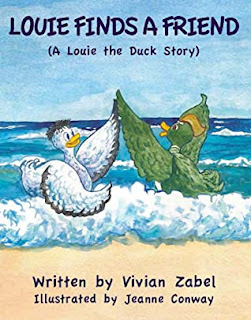
Review: Louie Finds A Friend by Vivian Zabel
Sunday, December 5, 2021
Learn to Write for Children - 4 Basic Tools
By Karen Cioffi
We all know how difficult it is to break into the business of writing for children. Whether you write fiction or nonfiction, it is a tough business and can be overwhelming for those just starting out. While all writing must adhere to certain guidelines, writing for children has additional principles unique to its genre.
To start, the words used in children’s writing must be age appropriate. This may sound easy to do, but it can be a difficult task. There are also certain techniques and tricks used specifically in writing for children, such as the Core of Three, sentence structure, and the timeframe in which the story should occur when writing for young children. In addition, it’s essential to make sure your conflicts, storyline, and point of view are appropriate for the age group you’re writing for.
Along with this, there are general techniques for writing, such as adding sensory details, showing instead of telling, and creating an engaging story that hooks the reader right away, along with writing great dialogue and using correct punctuation.
This is just the beginning though, there is also the business of editing your work, writing a winning query, and following submission guidelines; the list goes on and on.
But, don’t get discouraged, there is help.
Here are four basic tools to get you started and guide you down the children’s writing path:
1. Children’s Writer’s WORD BOOK by Alijandra Mogilner is a great resource that provides word lists grouped by grades along with a thesaurus of listed words. This allows you to check a word in question to make sure it is appropriate for the age group you’re writing for. It also provides reading levels for synonyms. It’s a very useful tool and one that I use over and over.
2. Read and learn about how to write for children. There are plenty of books and courses you can find online that will help you become a 'good' children's writer. One in particular is with an excellent reputation is The Institute of Children's Literature.
3. The Frugal Editor by award winning author and editor, Carolyn Howard-Johnson, is a useful book for any writing genre, including children’s. It is great resource that guides you through basic editing, to getting the most out of your Word program’s features, to providing samples of queries. The author provides great tips and advice that will have you saying, “Ah, so that’s how it’s done.”
4. How to Write a Children's Fiction Book by award-winning author and successful children's ghostwriter Karen Cioffi.
Yes, it's my book, but it really is jammed packed with tips, advice, examples, and much more on writing for children. It also includes DIY assignments and touches on submitting your manuscript and book marketing.
I’ve invested in a number of books, courses and programs in writing and marketing, and know value when I see it. The products above have a great deal of value for you as a children's writer, and they are definitely worth the cost.
Remember though, the most important aspect of creating a writing career is to actually begin. You can’t succeed if you don’t try. It takes that first step to start your journey, and that first step seems to be a huge stumbling block for many.
Don’t let procrastination or fear stop you from moving forward - start today!
ABOUT THE AUTHOR
Karen Cioffi is an award-winning children’s author, a successful children’s ghostwriter with 300+ satisfied clients worldwide, and an author online platform instructor with WOW! Women on Writing. For children’s writing tips, or if you need help with your children’s story, visit: https://karencioffiwritingforchildren.com
You can check out Karen’s books at: https://karencioffiwritingforchildren.com/karens-books/
Monday, November 29, 2021
Grammar in Writing IS Important
I can’t count the number of times I’ve heard or read, “Why should I care about using correct grammar in my writing? That’s why they have editors.” Wrong! Most publishers don’t edit much writing that comes their way, IF they even accept any error-filled manuscript. Paying for an experienced, dependable literary editor is expensive, and the editors themselves will do only so much.
Some writers fight the idea that grammar (including sentence structure, punctuation, subject/verb agreement, pronoun usage, spelling, etc.) impacts the worthiness of writing, which is like saying failing to lay a solid foundation does not impact the stability of a building. Good grammar is extremely important. Good grammar shows the writer's professionalism and attention to detail. The writer will also be able to give an explanation that is understood.
Grammatical errors can cause confusion, and, in the worst-case scenarios, they can completely change the meaning of a sentence. A writer not knowing how to use good grammar will make writing difficult to read. Poor grammar (including all subtexts) breaks the flow of reading, annoys the reader, and reflects badly on the writer. No-one wants to be jarred from a really interesting read by poor punctuation or glaring grammatical errors.
Writer Melissa Donovan states:
Too many times I’ve heard aspiring writers shrug off good grammar,
saying they’d rather focus on plot or character, they’d prefer to use a
natural, unlearned approach to keep the writing raw, or they will simply
hire an editor to do the dirty work.
I have a hard time buying into those lines of reasoning. Refusing to bother
with grammar is just plain lazy, especially for writers who yearn to be more
than hobbyists.
Why should writers embrace grammar rather than make excuses for ignoring it?
I am not able to cover a complete grammar course here, but I will give a few areas to give writers a beginning. Here are ten reasons why good grammar should be a
central pursuit in writing efforts:
1. Readability
If your work is peppered with grammatical mistakes and typos,
your readers are going to have a hard time trudging through it. Nothing
is more distracting than being yanked out of a good story because a word
is misspelled or a punctuation mark is misplaced. You should always
respect your readers enough to deliver a product that is enjoyable and
easy to use.
2. Communication
You can’t engage with others in your profession if you don’t speak the
language of your industry. Good luck talking shop with writers and
editors if you don’t know the parts of speech, the names of punctuation
marks, and all the other components of language and writing that are
related to good grammar. And, good luck communicating with most readers
if you don’t know how to correctly use grammar.
A current problem I find lately involves contractions between
subjects and verbs in the narrative (non-dialogue) parts of manuscripts.
We talk using contractions between subjects and verbs, so using them in
dialogue works. However, even if the manuscript is written in first
person, the narrative is not dialogue. Contractions between subjects and
verbs in the narrative portion can result in passive voice or in
confusion. For example, I’d could mean I would, I could, I should, I
had. The reader shouldn’t have to decide what the author meant. He’s
means he has or he is, passive voice, which we need to avoid to have
good writing, clear communication.
3. Getting Published
How will you get that short story, essay, or blog post published if you
don’t know the basics of grammar, spelling, and punctuation? Sure, some
managing editors will go over your work and clean it up for you, but
most reputable publishers have enough submissions that they can toss
grammatically weak work into the trash without thinking twice.
4. Working with an Editor
I love it when writers say they can just hire an editor. This goes back
to communication. If you can’t talk shop with other writers, you
certainly won’t be able to converse intelligently about your work and
its flaws with a professional editor. How will you respond to feedback
and revision suggestions or requests when you don’t know what the editor
is talking about? Remember, it’s your work. Ultimately, the final
version is your call, and you won’t be able to approve it if you’re
clueless about what’s wrong with it.
Also, you need to hire the right kind of editor. An English
teacher can possibly find grammar errors, if she actually understands
grammar (Note: not all English teachers teach grammar anymore). However,
not all English teachers can edit for other parts of a successful
manuscript.
5. Saving Money
Speaking of hiring an editor, you should know that editors will only go
so far when correcting a manuscript. Returning work to a writer that is
solid red with markups doesn’t make either the editor nor the author
feel good. Most freelance editors and proofreaders have a limit to how
much they will mark up any given text, so the more grammar mistakes
there are, the more surface work the editor will have to do. That means
she won’t be able to get into the nitty-gritty and make significant
changes that take your work from average to superior because the amount
of work needed to make the manuscript readable.
6. Invest in Yourself
Learning grammar is a way to invest in yourself. You don’t need anything
more than a couple of good writing resources and a willingness to take
the time necessary to hone your skills. In the beginning, it might be a
drag, but eventually, all those grammar rules will become second nature,
and you will have become a first-rate writer.
7. Respectability, Credibility, and Authority
As a first-rate writer who has mastered good grammar, you will gain
respect, credibility, and authority among your peers. People will take
you seriously and regard you as a person who is committed to the craft
of writing, not just some hack trying to string words together in a
haphazard manner.
8. Better Writing All Around
When you take the time to learn grammar, using correct grammar becomes
second nature. As you write, the words and punctuation marks come
naturally because you know what you’re doing; you’ve studied the rules
and put in plenty of practice. That means you can focus more of your
attention on other aspects of your work, like structure, context, and
imagery (to name a few). This leads to better writing all around.
9. Self-Awareness
Some people don’t have self-awareness. They charge through life
completely unaware of themselves or the people around them. But, most of
us possess some sense of self. What sense of self can you have as a
writer who doesn’t know proper grammar? That’s like being a carpenter
who doesn’t know what a hammer and nails are.
10. There’s Only One Reason to Abstain from Good Grammar
There is really only one reason to avoid learning grammar: the writer is just plain lazy. Anything else is a silly excuse.
No matter what trade, craft, or career one is pursuing,
everyone starts with learning the basics. Actors learn how to read
scripts. Scientists learn how to apply the scientific method.
Politicians learn how to… well, never mind what politicians do. We are
writers. We must learn how to write well, and writing well definitely
requires using good grammar.
William B. Bradshaw, and author and writing expert says:
Whenever I get on my soapbox about grammar, people often tell me I put too
much emphasis on the importance of grammar -- after all, they say, why does
it matter what kind of grammar people use; the important thing is whether or
not they understand what they are saying and writing to one another.
According to Barry Kelly in “Why Grammar Is Important in
Writing,” “Grammar does play a vital role in creative writing. Proper
grammar is necessary for credibility, readability, communication, and
clarity. Mastering grammar will allow you as a writer to make your work
clearer and more readable.”
Grammar is the foundation for communication. Let’s examine some grammatical mistakes:
She was deeply effected by the death of her beloved pet. Affect is a verb, not effect (noun)
“Its over their.” She gestured to the large mahogany table slowly decaying in the corner. It’s over there.
Mary didn’t know weather it was time to go or not. Whether
He bought milk when he should of bought bread. Have rather than the word of
Let’s eat Mary. and Let’s eat, Mary.
Can you see how the first example could end up with Mary being eaten for dinner?
Goats Cheese Salad – crispy lettuce, juicy tomatoes, cucumber, goats, cheese
Vegetarians are certainly going to be put
off this salad when they realize it contains not only
cheese, but goats!
My interests include cooking dogs, walking, reading and watching films.
Oh dear, those poor dogs. I wonder who
gets to eat the canine culinary delights created by this
person?
There is used in place of their or they're, or one of the others is used incorrectly.
It's and its are not interchangeable.
Your and you're are not the same.
Commas are not used where needed, or they are sprinkled like
rose petals everywhere possible. Run-on sentences create a feeling of
confusion in the minds of readers.
I don't want to read a book by someone who can't manage to
understand the difference between homonyms (words that sound alike but
have different meanings) and/or what version of a pronoun is used as the
object of a preposition.
For example, I often hear (hear not here), "That's important
to Mary and I." Really? He would say "That's important to I"? Actually,
that is what he did say. A compound object is the same form pronoun as a
singular object. And, I have heard and read that problem from so called
well-educated people. Anything between a speaker or writer and another
person means the object form MUST be used: between John and me; between
my husband and me; between you and him.
I, he, she, we, they are subjects; me, him, her, us, them are
object forms; my, his, her/hers, ours are possessive forms. Object
forms are not to be used as subjects. Example: Mary and him went to
town. (test – him went to town. Uh, no, he went to town.) Subject forms
are not possessives even if a writer adds an apostrophe and an s.
Example: John’s and I’s reports are due tomorrow. Uh, no, should be
John’s and my reports are due tomorrow. Subject forms are never used as
objects, as discussed above. Example: The packages are for John and I.
(test – packages are for I. No, packages are for me.)
1. Correct grammar is required (except in the case of dialogue in dialect).
2. Correct sentence and grammatical mechanics are needed. This point
means correct subject/verb agreement, correct sentence structure,
correct pronoun reference and usage, sentence variety, etc.
3. Correct spelling is a MUST. Correct spelling includes using correct
words in context. Words that sound the same but are spelled differently
are misspelled if the wrong word is used: For example, they're, their,
and there mean completely different things.
4. Correct punctuation is important to avoid confusion.
IF a person wants to be a REAL writer, he/she must know
grammar to be considered professional. Therefore, if you don’t have a
good grasp of grammar and all of its subtexts, learn. Find a good
easy-to-understand book of grammar and read it, refer to it, and use the
knowledge inside it. Find websites with grammar lessons and
information.
Grammar has much to do with good writing. Josh Price for
Writing Studio, May 1, 2021, states: “Grammar ensures everything you
write is clear; good grammar makes your writing sound professional,
which gives it authority; good grammar allows your writing to be more
persuasive and competitive; and you express yourself better with better
grammar.”
Tuesday, November 9, 2021
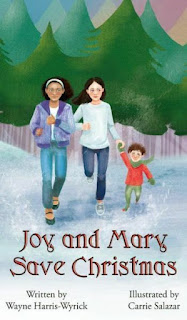
Review: Joy and Mary Save Christmas by Wayne Harris-Wyrick
Joy and her friend, Mary, are taken on a magical adventure to help Santa and the elves when stolen presents and electrical problems hit the North Pole in Joy and Mary Save Christmas by Wayne Harris-Wyrick.
Sunday, November 7, 2021
Writing Fiction vs. Writing Nonfiction
By Karen Cioffi
Writing fiction and writing nonfiction have some distinct similarities and differences.
But, before we get into that, let’s find out the definitions of fiction and nonfiction:
Fiction: According to Merriam-Webster.com, fiction is “something invented by the imagination or feigned, specifically an invented story; the action of feigning or of creating with the imagination.”
Nonfiction: Merriam-Webster’s definition of nonfiction is “literature or cinema that is not fictional.” According to Allwords.com, nonfiction is “written works intended to give facts, or true accounts of real things and events.”
Now on to the similarities and differences.
Writing Fiction and Writing Nonfiction Similarities:
1. You need to start with an idea.
2. You can write about almost anything.
3. You need ‘good’ writing skills (at least you should have good writing skills).
4. You need to have a beginning, middle, and end to the story.
5. You need to have an engaging, entertaining, informative, or interesting story.
6. You can work from an outline or you can seat-of-the-pants it.
7. You may need to do research.
8. You need to revise, proof, and edit your work.
Writing Fiction and Writing Nonfiction: Two Significant Differences
1. If you are writing nonfiction, you must stick to truths and facts, a nickel is a nickel, the sun rises in the east and sets in the west, two plus two equals four, and 10 times 10 equals 100. While there may be some grey areas, such as perspective, circumstances, or circumstantial evidence leading up to a fact based story, the fact is always the fact.
As an example: According to “The World’s Easiest Astronomy Book” (9/15/2009) by Hiroshi Nakagawa, “The speed of light is 300,000 km (186,000 miles) per second, meaning that light could circle the Earth seven and a half times in a single second. Even at this incredible speed it still takes light from the Sun eight minutes to reach the Earth. That means that when we see the Sun, what we actually see is the Sun from 8 minutes ago” (p. 13).
These are facts.
If you’re writing a nonfiction story about astronomy, these facts can’t change. Your story is limited to truths and facts. This is not to say the story can’t be amazingly interesting and engaging. The children’s middle-grade nonfiction book “The World’s Easiest Astronomy Book” can certainly spark a child’s imagination and interest in astronomy.
On the other hand, if you’re writing fiction, your imagination is your only limit. You don’t have to stay within the confines of what is known, what is truth. This offers a certain freedom.
If you want the sun to be ‘blood red,’ then it’s blood red. If you want to be able to travel to the moon in the blink of the eye, then it’s so. If you say a character can ‘walk through walls’ or is invisible, then he can and is. You can create new worlds, new beings . . . again, your imagination is your only limit.
2. In writing nonfiction you will most likely need to provide reference sources and add quotes to your story. This is to establish the reliability and credibility of your story.
In this case, you will need to reference the source of the quote.
If you notice above, in regard to the facts about the speed of light, I included the name of the book and the author along with the page number. These references substantiate the facts within your article. This makes your nonfiction story credible.
This is not the case with writing fiction.
With fiction, you will NOT need information references for credibility. Although, it’s important to realize that your fiction story will become its own truth and you will need to stay within the confines of the particular story and realm you create.
The reason for this: every story needs structure and intent; it needs to move forward to a satisfying ending. If you move off in too many directions, you’ll lose your intent and most probably your reader. To ensure the structure and your intent remains intact, you’ll need to stay within the confines of the story you create.
While the similarities between writing fiction and writing nonfiction seem to outweigh the differences, the differences are significant enough for most writers to prefer one genre over the other.
ABOUT THE AUTHOR
You can check out Karen’s books at: https://karencioffiwritingforchildren.com/karens-books/
Tuesday, October 26, 2021
Review: A Baby Doll from Santy Claus by Vivian Zabel